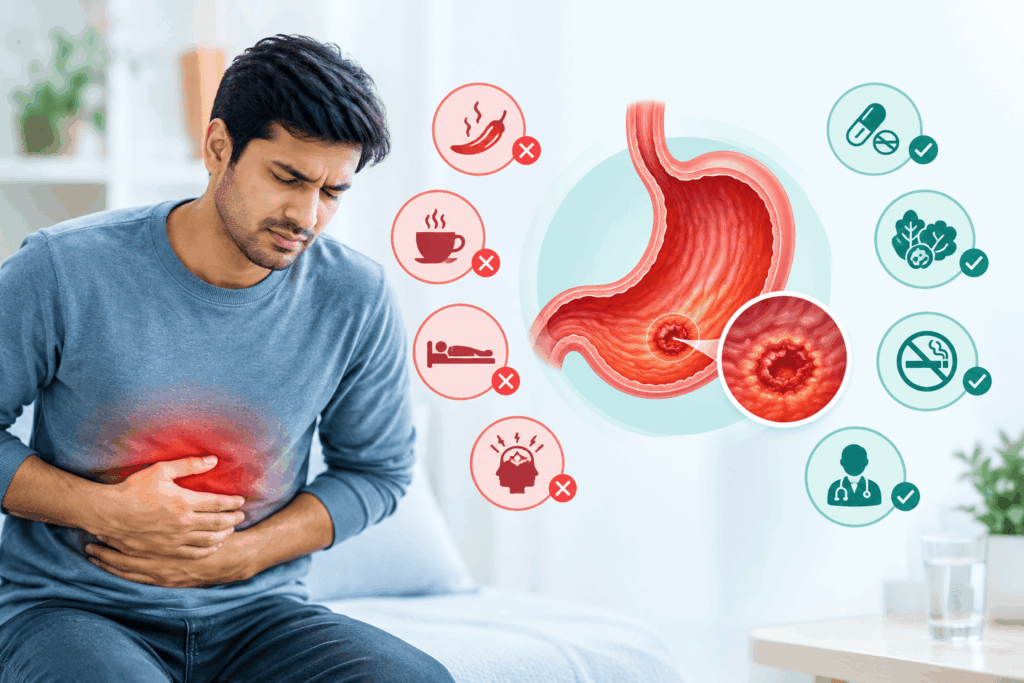
When dealing with chronic stomach pain, people often assume that ulcers are purely caused by eating spicy foods or suffering from extreme stress. Others believe that drinking cold milk, taking over-the-counter antacids, or relying on home remedies is enough to cure them. These are dangerous misunderstandings. Misinterpreting peptic ulcer causes or attempting to self-medicate can allow inflammation to deepen, potentially leading to severe complications like internal bleeding, stomach perforation, or even an increased risk of stomach cancer.
Dr. Saurubh Jaisawal, a CMC Vellore-trained Gastroenterologist in Patna, believes that separating medical facts from widespread misconceptions is the single most important step toward healing. Effective peptic ulcer treatment requires addressing the true biological root causes rather than simply suppressing temporary symptoms with home remedies.
What is Peptic Ulcer?
Your digestive tract is lined with a protective layer of mucus that guards tissues against aggressive stomach acid needed for digestion. When this protective barrier breaks down or acid production increases excessively, stomach acid eats away at the underlying tissue lining, creating painful open sores known as peptic ulcers.
Types of Peptic Ulcers
Gastric Ulcers: Open sores that develop on the inner lining of the stomach.
Duodenal Ulcers: Open sores that form on the upper section of the small intestine (the duodenum).
Are Peptic Ulcers, Gastric Ulcers & Stomach Ulcers Same?
Yes and no. Peptic ulcer is the overarching medical umbrella term for any sore caused by digestive acid. A stomach ulcer (also called a gastric ulcer) is simply a specific type of peptic ulcer located in the stomach. A duodenal ulcer is another form located just below the stomach. While they share similar mechanisms, their pain patterns and timing relative to meals can differ.

“An ulcer is an actual open wound in your digestive lining. Treating it requires removing the root cause, such as a bacterial infection or chemical irritant, not just temporarily cooling down stomach acid.”
Busting 8 Dangerous Peptic Ulcer Myths
Myth 1: Spicy Food is Always the Main Culprit
Fact: While spicy food can irritate an existing sore and trigger sharp pain, it is not a direct peptic ulcer cause. The vast majority of peptic ulcers are caused by two primary factors:
- Helicobacter pylori (H. pylori) Infection: H. pylori infection is the most common peptic ulcer cause. It is a common bacterial infection that damages the protective mucosal lining of the stomach and duodenum.
- Frequent Use of NSAIDs: Overuse of nonsteroidal anti-inflammatory drugs (painkillers like ibuprofen, naproxen, or diclofenac) is another major cause of peptic ulcers. NSAID overuse disrupts the stomach’s natural protective mucus layer.
Myth 2: Stress Directly Causes Ulcers
Fact: Psychological stress alone does not create a peptic ulcer. However, severe physical or emotional stress can worsen your overall gut motility, increase acid secretion, and aggravate existing peptic ulcer symptoms. Managing stress through healthy routines and restful sleep supports the body’s healing process, but medical therapy is still required to cure the ulcer itself.
Myth 3: Antacids Heal Ulcers
Fact: Antacids temporarily neutralize stomach acid to offer fast, short-term pain relief, but they do not heal the underlying open sore. Achieving true ulcer healing requires medical intervention tailored to the specific cause.
Key peptic ulcer treatment options include:
- Acid-Suppression Therapy: Using specialized prescription therapies that significantly reduce stomach acid production for several weeks, allowing the delicate mucosal tissue to recover.
- Targeted Antibacterial Courses: Eradicating active H. pylori bacterial infections using specific combination regimens prescribed by a specialist.
- Mucosal Protective Agents: Utilizing specialized treatments that form a protective physical barrier over the ulcer to shield it from harsh digestive acids while it heals.
- Irritant Elimination: Safely tapering off or replacing ulcer-causing medications (such as certain pain relievers) under medical guidance.
- Targeted Endoscopic Evaluation: While simple ulcers are treated medically, an upper GI endoscopy is recommended if initial conservative treatments do not resolve symptoms, or if warning signs appear. It is generally the definitive procedure used to visually assess stubborn ulcers, take precise tissue samples, or directly treat active bleeding.
Myth 4: Ulcers are Permanent
Fact: With an accurate diagnosis and targeted therapy, almost all peptic ulcers heal completely within 4 to 8 weeks. However, recurrence is possible if the underlying root cause, such as an uneradicated H. pylori infection or continued NSAID use, persists untreated.
Myth 5: Ulcers Can be Left Untreated
Fact: Ignoring an ulcer is extremely dangerous. Left unmanaged, peptic ulcers can lead to severe life-threatening complications, including:
- Internal Bleeding: Slow blood loss leading to severe anemia, or sudden massive bleeding causing bloody/black stools.
- Perforation: A literal hole eroded through the stomach wall, leading to severe abdominal infection (peritonitis).
- Gastric Outlet Obstruction: Scar tissue or swelling blocking the passage of food through the digestive tract.
- Increased Malignancy Risk: Chronic H. pylori gastritis and unhealed gastric ulcers are linked to an increased risk of stomach cancer.
Myth 6: Milk & Home Remedies are Enough to Treat Ulcers
Fact: Drinking cold milk or using home remedies may temporarily coat the stomach lining and neutralize acid for a few minutes. However, milk actually stimulates the stomach to produce even more acid shortly after drinking it. While dietary changes help manage symptoms during recovery, they cannot replace evidence-based stomach ulcer treatment.
Myth 7: Smoking & Alcohol don’t impact ulcers
Fact: Both alcohol and nicotine severely impair your digestive tract. Alcohol erodes the protective gastric mucosal barrier and increases acid secretion. Smoking impairs blood flow to the stomach lining, slows down the healing process, and significantly increases the risk of ulcer recurrence and bleeding.
Myth 8: Ulcers Don’t Recur Once Treated
Fact: Successfully treating an ulcer once does not grant permanent immunity. If the underlying cause remains unaddressed, ulcers can and frequently do recur. Recurrence usually happens when an H. pylori bacterial infection is not completely eradicated, if a patient resumes frequent use of stomach-irritating medications without mucosal protection, or if lifestyle triggers remain unmanaged.
To prevent an ulcer flare-up from returning, follow these actionable steps:
- Confirm Bacterial Eradication: Complete follow-up testing (such as a breath or stool test) 4 to 6 weeks after finishing H. pylori treatment to ensure the infection is 100% gone.
- Avoid Self-Medicating with NSAIDs: Stop taking unprescribed painkillers (ibuprofen, naproxen, diclofenac). If pain relief is necessary, ask your gastroenterologist for gut-safe alternatives.
- Limit Alcohol & Quit Smoking: Avoid alcohol and tobacco completely; both erode the stomach lining, impair tissue healing, and significantly boost recurrence rates.
- Maintain Consistent Meal Timing: Avoid skipping meals or fasting for extended periods, as prolonged empty-stomach periods allow unbuffered stomach acid to irritate the mucosal lining.
- Manage Stress & Sleep Well: Maintain 7 to 8 hours of quality sleep and engage in daily stress-reduction practices to prevent stress-induced acid spikes and altered gut motility.
When to Seek Specialist Help?
You should schedule a consultation with a specialist if you experience persistent abdominal burning, pain between meals or at night, chronic bloating, nausea, or early fullness.
Red-Flag Peptic Ulcer Symptoms That Require Emergency Care
- Passing dark, black, or tarry stools
- Vomiting fresh blood or dark material resembling coffee grounds
- Sudden, severe, agonizing stomach pain that comes on abruptly
- Fainting, unexplained dizziness, or severe weakness
How Are Peptic Ulcers Diagnosed?
To provide targeted peptic ulcer treatment, a specialist will utilize precise diagnostic steps:
- H. pylori Testing: Non-invasive breath tests, stool antigen tests, or lab evaluations to identify active bacterial infection.
- Upper GI Endoscopy: A quick, minimally invasive procedure using a small, flexible tube with a camera to examine the lining of the stomach and duodenum directly. Endoscopy allows the doctor to visually confirm the ulcer, check for complications, and take a small tissue biopsy if needed.
- Follow-up Testing: Patients treated for H. pylori require a routine follow-up test (usually 4-6 weeks after completing antibiotics) to confirm the bacteria has been completely eradicated.
Visit Dynamic Super-Speciality Liver & Gastro Center, Patna
Believing common myths about stomach ulcers can delay essential medical care and put your digestive health at risk. Peptic ulcers are fully treatable, but lasting recovery requires an accurate medical diagnosis rather than home remedies or over-the-counter antacids.
Consult Dr. Saurubh Jaisawal, experienced Gastroenterologist, for accurate root-cause diagnosis and evidence-based, personalized peptic ulcer treatment in Patna.
Experience long-term relief from digestive discomfort!
Book Appointment Now: +91 94706 23130
Address: Pillar No. 76, Mazar Gali, Raja Bazar, Patna – 800014.
Website: www.drsaurabhjaiswalpatna.com
Google Profile