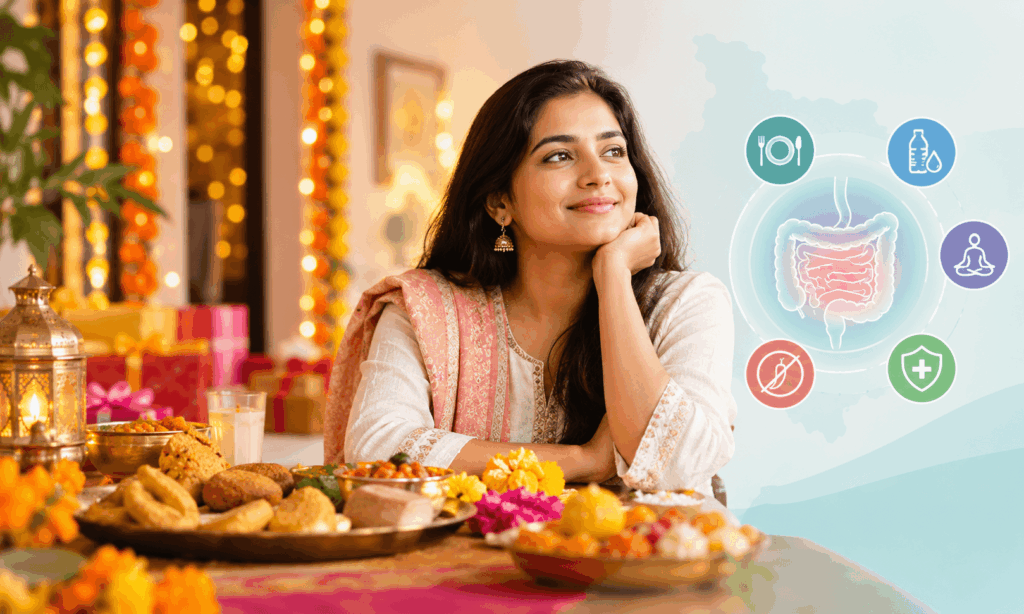
With a continuous lineup of celebrations, from Durga Puja and Dussehra to Diwali and Chhath Puja, festive spirits run high across Bihar. However, festivals typically bring deep-fried delicacies, rich sweets, sudden fasts, irregular sleeping schedules, and heightened social stress. For anyone living with Inflammatory Bowel Disease, these drastic changes can disrupt gut health and increase the risk of a painful IBD flare-up. But does living with a chronic gut condition mean missing out on Bihar’s rich cultural traditions? Absolutely not!
Dr. Saurubh Jaisawal, a CMC Vellore-trained gastroenterologist in Patna, believes that enjoying the festive season and maintaining gut stability can go hand in hand. While proactive IBD management is essential as Bihar prepares for its grandest time of the year, avoiding flare-ups does not mean total isolation or extreme food deprivation. Instead, it relies on strategic planning, mindful eating, and understanding your personal dietary boundaries so you can celebrate safely alongside your loved ones.
What is Inflammatory Bowel Disease (IBD)?
Inflammatory Bowel Disease (IBD) is an umbrella term for chronic autoimmune conditions that cause prolonged, destructive inflammation throughout the gastrointestinal (GI) tract. Unlike functional digestive issues (such as IBS), IBD involves actual structural damage, ulceration, and tissue erosion within the intestinal lining.
IBD operates in a cycle of two main phases:
IBD Remission: Periods where intestinal inflammation decreases, symptoms subside or disappear, and the digestive lining begins to heal.
IBD Flare-Up: Periods of active inflammation where symptoms suddenly return or intensify, often triggered by stress, dietary indiscretions, infections, or skipped medications.
Types of IBD
Ulcerative Colitis (UC): Causes continuous inflammation and ulcers strictly confined to the innermost lining of the large intestine (colon) and rectum.
Crohn’s Disease: Causes patchy, skip-lesion inflammation that can affect any part of the digestive tract from the mouth to the anus, often penetrating deep into the bowel wall layers.
Common Symptoms of IBD
- Persistent diarrhea (frequently containing blood, mucus, or pus)
- Severe abdominal pain, cramping, and bloating
- Urgent need to pass stools, often accompanied by tenesmus (feeling of incomplete evacuation)
- Unexplained weight loss, chronic fatigue, and low-grade fever
- Reduced appetite and nutrient malabsorption
Challenges Faced by IBD Patients During Festivities
The unique cultural fabric of festivals in Bihar presents distinct physical and social hurdles for IBD management:
- Lots of Fried & Heavy Foods: Festive spreads are dominated by deep-fried items (kachoris, samosas, puris) and rich, dairy-heavy sweets (khaja, pedas, gulab jamun) that overburden an inflamed digestive tract.
- Fasting Traditions: Strict ritual fasting during occasions like Chhath Puja or Navratri alters gut motility, increases stomach acid concentration, and can trigger severe spasms or acidity once food is reintroduced.
- Social Pressure & Food Pushers: Relatives and hosts often push festive treats, making it socially uncomfortable to decline high-risk dishes.
- Sleep Deprivation & High Stress: Late-night pandal hopping, hosting duties, and altered sleep schedules heighten systemic inflammation via the gut-brain connection.

“Festivals are a time for joy and togetherness, not for enduring silent physical distress. IBD management during the festive season isn’t about saying ‘no’ to every celebration; it is about making informed, smart choices that protect your gut barrier while keeping you part of the festivities.”
Actionable Strategies for Biharis to Manage IBD During Festival Season
Tip 1: Modify Traditional Dishes & Control Portions
Navigating traditional festive spreads doesn’t mean you have to abstain from celebrating altogether. Adopting a structured IBD diet during festivals allows you to enjoy traditional flavors while shielding your digestive lining from severe inflammation. Make smart swaps and control your portions.
High-fat, deep-fried treats and heavy dairy sweets can easily irritate your intestinal lining, leading to cramping and loose stools. Instead of completely avoiding festival treats, swap heavy items for gentler, easily digestible alternatives and keep your portion sizes small.
Here is a quick guide to making gut-friendly festival choices:
| Traditional Heavy Options | Safer Gut-Friendly Swaps | Why It Works for Your Gut | What to Do If You Can’t Swap |
| Deep-fried snacks (Samosa, Kachori, Puri) | Steamed or baked snacks (Dhokla, idli, baked samosa, boiled chana) | Lowers fat intake, reducing intestinal spasms and diarrhea. | Limit yourself to just 1 or 2 bites, peel off the heavy outer fried crust, or dab excess oil with a napkin. |
| Heavy dairy sweets (Peda, Khaja, cream-heavy Gulab Jamun) | Suji halwa (cooked in light ghee), rasgulla (squeezed of syrup), chhena | Easier to digest and lowers the risk of lactose overload. | Take a tiny half-piece to taste, gently squeeze out extra syrup, and avoid eating it on an empty stomach. |
| Spicy, heavy gravies (Rich mutton or paneer curry) | Light khichdi, boiled rice with soft-cooked pumpkin or bottle gourd (lauki) | Soft, soluble fiber gently moves through the digestive tract. | Take only the soft protein pieces (chicken/paneer) and leave the rich, oily gravy behind on your plate. |
| Sugary drinks & sodas (Packaged juice, cold drinks) | Tender coconut water, fresh buttermilk (mattha with low fat), sips of warm water | Keeps you hydrated while supplying soothing natural electrolytes. | Ask for a glass of plain warm water or plain water with lemon (without sugar), or sip slowly and dilute sodas with water. |
Tip 2: Approach Fasting with Caution
Rigid fasting can trigger severe gut distress for IBD patients on active medication regimens. If participating in religious ceremonies or rituals, opt for modified fasting options where permitted. Keep yourself hydrated with fresh coconut water, sips of lukewarm water, or clear broths, and avoid breaking fasts with heavy, oily, or hyper-acidic foods.
Tip 3: Stay Hydrated with Gut-Friendly Beverages
Proper hydration is crucial during festivities, as inadequate fluid intake can worsen constipation or trigger an IBD flare-up through dehydration and intestinal distress.
- Fresh, low-fat buttermilk (mattha) prepared with minimal spices
- Tender coconut water rich in natural electrolytes
- Plain lukewarm water sipped regularly throughout the day
- Carbonated sodas and packaged sugary drinks
- Excess caffeinated tea, coffee, and energy drinks
Tip 4: Strictly Avoid Alcohol and Tobacco
Alcohol directly damages the mucosal lining of the stomach and intestine, increases intestinal permeability, and is a well-documented trigger for severe IBD flare-ups. Say a firm no to alcohol and tobacco during celebrations to keep your digestive tract calm.
Tip 5: Eat Prior to Attending Social Gatherings
Heading to family gatherings or Durga Puja pandals on an empty stomach makes high-fat, fried street foods far more tempting. Eat a light, safe meal at home, such as well-cooked khichdi, boiled rice with curd, or steamed vegetables, before leaving. This keeps you full and prevents impulse eating.
Tip 6: Prioritize Rest and Stress Management
Late-night events and disrupted sleep directly alter gut bacteria and trigger inflammatory pathways. Protect your sleep by aiming for 7–8 hours of restful sleep every night. Balance late-night festive activities with quiet recovery time during the day.
Tip 7: Never Skip or Alter Your Medications
Amid the excitement of festivities, it is easy to forget daily dose schedules. Never pause or reduce your prescribed inflammatory bowel disease treatment without consulting your doctor, even if you feel completely fine. Carry your medications in a small travel pouch whenever attending events away from home.
When Should You See Your Gastroenterologist?
Despite taking precautions, sudden flare-ups can occasionally occur. Knowing when to seek timely medical attention is critical to preventing hospitalization or severe tissue damage.
Warning Signs of a Severe IBD Flare-Up
- Noticing fresh blood or dark clots in your stool
- Running a persistent fever alongside increasing abdominal pain
- Experiencing more than 5–6 loose, watery bowel movements a day
- Severe vomiting or inability to keep liquids down
- Sharp, severe abdominal pain that does not resolve after a bowel movement
How a Gastroenterologist Helps During a Flare-Up
Consulting your gastroenterologist for prompt IBD treatment in Patna (or wherever you are) ensures your symptoms and the severity of active intestinal inflammation are properly evaluated. Your doctor may recommend targeted blood work, stool markers (such as fecal calprotectin), or quick endoscopic evaluations to plan your treatment.
Your specialist can prescribe short-term anti-inflammatory adjustments, adjust your baseline medications, or provide targeted mucosal protection to bring the flare-up under control swiftly before permanent bowel damage occurs.
Visit Dynamic Super-Speciality Liver & Gastro Center, Patna
Living with Inflammatory Bowel Disease does not mean sitting out Bihar’s most cherished festivals. By following these practical strategies, prioritizing gut-friendly nutrition, and listening to your body’s signals, you can enjoy every festival with confidence and peace of mind.
Consult Dr. Saurubh Jaisawal, experienced Gastroenterologist & IBD Specialist, for expert, evidence-based and personalized IBD management in Patna.
Your health shouldn’t take a holiday! Take control of your gut health today.
Book Appointment Now: +91 94706 23130
Address: Pillar No. 76, Mazar Gali, Raja Bazar, Patna – 800014.
Website: www.drsaurabhjaiswalpatna.com
Google Profile