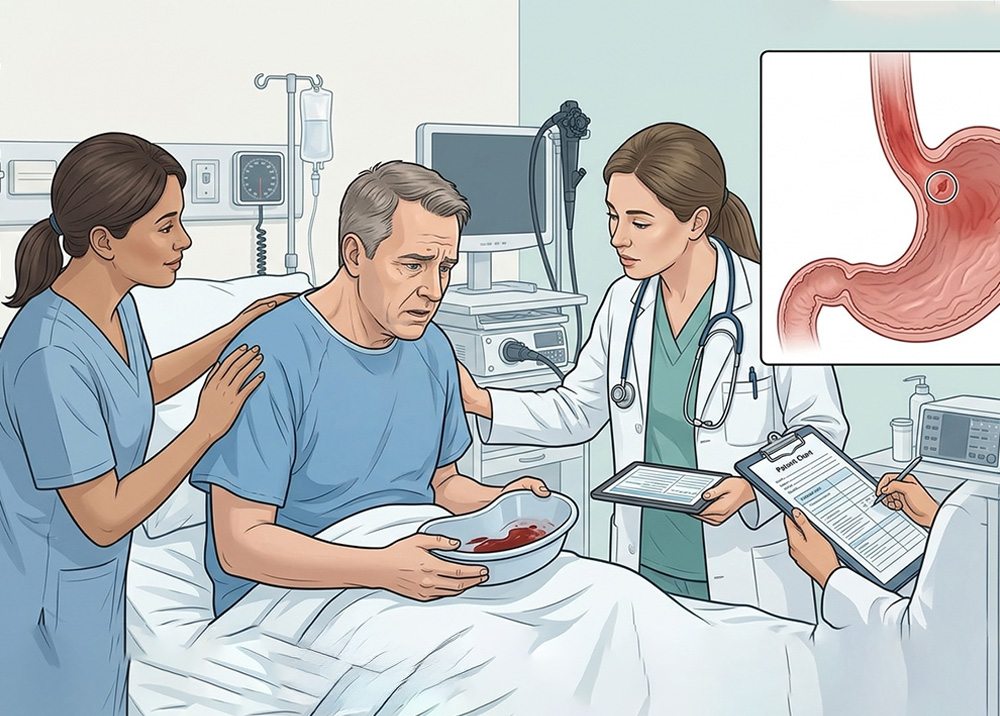
Seeing blood in your vomit, a medical emergency known as hematemesis, is an incredibly frightening experience that demands immediate medical attention. Whether the blood appears as bright red streaks, dark red clots, or resembles dark ‘coffee grounds’, it is a direct biological signal that bleeding is occurring somewhere in your upper gastrointestinal tract, which includes your esophagus, stomach, or the first part of your small intestine. This is not a symptom that can be managed with home remedies or a ‘wait-and-see’ approach; severe upper GI bleeding can quickly lead to a rapid drop in blood pressure and life-threatening shock.
In this critical medical guide, Dr. Saurabh Jaisawal, a top CMC Vellore-trained Consultant Gastroenterologist and Hepatologist in Patna, explains the primary vomiting blood causes and treatment options, detailing the urgent diagnostic and therapeutic procedures needed to stop the bleeding at its source and safeguard your health.
What is Blood in Vomit?
Hematemesis refers to the regurgitation of stomach contents mixed with blood, or the expulsion of pure blood alone. It indicates that active bleeding is occurring somewhere in your upper gastrointestinal (GI) tract.
The appearance of the blood can provide critical clues about the source and speed of the bleeding:
- Bright Red Blood: Usually indicates a fresh, rapid, and active bleed in the esophagus or stomach.
- Dark Red or ‘Coffee Ground’ Vomit: Indicates that the blood has remained in the stomach for some time, allowing stomach acid to partially digest it and change its color and texture.
Understanding the Root Causes of Upper GI Bleeding
Identifying the specific causes of vomiting blood and treatment pathways depends heavily on locating the exact site of injury. The most common causes of blood in vomitus or upper GI bleeding include:
- Peptic Ulcers: Peptic ulcers are deep stomach or small intestine sores, typically triggered by H. pylori or long-term painkiller use.
- Esophageal Varices: Esophageal varices are enlarged, rupture-prone esophageal veins typically caused by chronic liver cirrhosis.
- Mallory-Weiss Tears: Small tears in the lining of the esophagus caused by severe, prolonged vomiting or violent coughing.
- Severe Gastritis: Acute, severe inflammation of the stomach lining that leads to erosion and localized bleeding.
- Gastrointestinal Tumours: Non-cancerous or cancerous growths in the stomach or esophagus that erode the surrounding tissue.
Why Is Vomiting Blood a Critical Medical Emergency?
Vomiting blood is never normal. It is considered a frontline medical emergency because internal bleeding can escalate rapidly without visible outward signs.
If left unmanaged, active internal bleeding leads to a dangerous drop in blood volume. This can cause hypovolemic shock, a life-threatening state where the heart can no longer pump enough blood to sustain your vital organs. Treating the root cause early prevents irreversible internal damage.
Who Is at Higher Risk?
Certain individuals have a greater likelihood of developing gastrointestinal bleeding.
Risk factors include:
- Chronic liver disease
- Cirrhosis
- Peptic ulcer disease
- Long-term painkiller use
- Blood thinner medications
- Excessive alcohol consumption
- Severe acid reflux disease
- Previous gastrointestinal bleeding episodes
- Advanced age
Patients with liver disease are particularly vulnerable because bleeding from esophageal varices can become severe very quickly.

“Vomiting blood is never a symptom to observe at home. Early diagnosis allows us to identify the source of bleeding quickly and intervene before significant complications occur.”
Symptoms and Red Flags: When to See a Doctor Urgently
While hematemesis is a major sign on its own, it frequently occurs alongside other critical symptoms. You must seek emergency medical care immediately if you notice:
- Dizziness, lightheadedness, or fainting (syncope)
- Blurred vision or sudden confusion
- Rapid, shallow breathing and cold, clammy skin
- Severe, sharp, or persistent abdominal pain
Passing black, tarry, or foul-smelling stools (melena), which indicate digested blood traveling through the intestines
How Do We Diagnose Upper GI Bleeding?
At Dynamic Super-Speciality Liver & Gastro Center, diagnosis begins with a detailed clinical assessment and stabilization of the patient.
Investigations may include:
- Blood tests
- Liver function tests
- Coagulation profile
- Ultrasound Abdomen
- CT scan when required
- Upper GI Endoscopy
Among these, endoscopy remains the most important tool for identifying the source of bleeding
Advanced Treatment Approach for Upper GI Bleeding
Dr. Saurubh Jaisawal, a trusted Advanced Endoscopy Specialist in Patna, manages this GI emergency by following a thorough, step-by-step stabilization protocol:
Immediate Stabilization: Restoring blood volume through specialized intravenous (IV) fluids while monitoring blood pressure closely.
Endoscopic Therapy: Endoscopy uses a camera-tipped tube to find the bleed and instantly stops it using clips, medication, or heat. Medication Management: High-dose intravenous medications are administered to rapidly lower stomach acid levels, allowing the damaged tissues and ulcers to heal cleanly.
When Should You See a Specialist?
Consult a specialist like Dr. Jaisawal, a leading Gastroenterologist in Patna immediately if you experience:
- Any episode of Blood in Vomit
- Coffee-ground colored vomit
- Black or tarry stools
- Dizziness or fainting
- Severe abdominal pain
- Rapid heartbeat
- Known liver disease with vomiting blood
- Recurrent vomiting associated with bleeding
- Unexplained weakness or fatigue
Early intervention can prevent life-threatening complications and significantly improve outcomes.
Visit Dynamic Super-Speciality Liver & Gastro Center, Patna
If you or a loved one experiences blood in vomit or symptoms suggestive of Upper GI Bleeding, seek immediate medical attention. Dr. Saurubh Jaisawal, Consultant Gastroenterologist and Hepatologist, provides rapid stabilization during GI emergencies and ensures patient safety while preventing serious complications and health risks.
Book Appointment Now: +91 94706 23130
Address: Pillar No. 76, Mazar Gali, Raja Bazar, Patna – 800014.
Website: https://drsaurabhjaiswalpatna.com/
Google Profile: Dynamic Liver Centre – Dr Saurabh Jaiswal | Best Gastroenterologist in Patna, Bihar