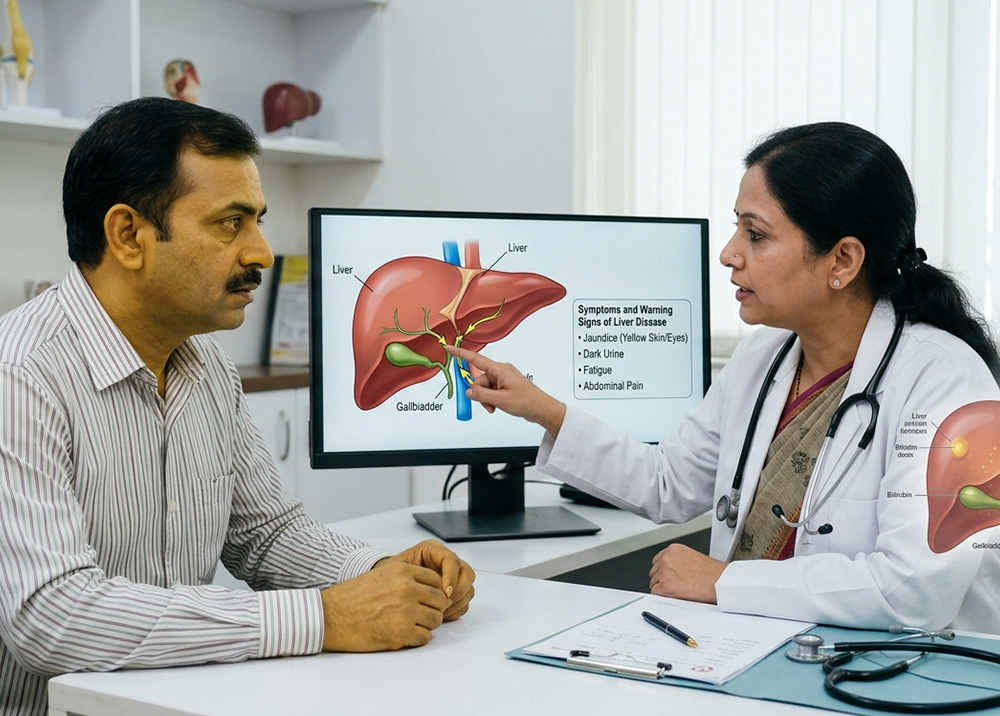
When someone notices a yellow tint in their eyes or skin, the immediate conclusion is usually, ‘I have caught jaundice.’ Across India, it is an age-old habit to treat this condition with local home remedies, dietary restrictions, or over-the-counter alternative therapies, waiting for the yellow color to naturally fade away. However, viewing this condition purely as an isolated illness is dangerous. It is critical to understand the underlying causes of jaundice for treatment that works.
Dr. Saurubh Jaisawal, Bihar’s first and only CMC Vellore-trained Hepatologist in Patna, emphasizes that simply trying to flush out the yellow pigment without identifying the actual biological cause can mask progressive liver damage, turning a manageable condition into an emergency.
What is Jaundice?
Jaundice is the yellow discoloration of the skin, mucous membranes, and the whites of the eyes (sclera). This yellowing occurs when there is an abnormal, excessive buildup of a yellowish-orange bile pigment called bilirubin in the bloodstream and bodily tissues.
Bilirubin is a natural byproduct created when the body breaks down old or damaged red blood cells. Normally, the liver filters bilirubin from the blood, processes it, and releases it into the digestive tract through bile. When any stage of this complex filtration pathway breaks down, bilirubin spills over into the tissues, causing the classic yellow appearance.
Common Symptoms of Jaundice
Patients with jaundice may experience:
- Yellowing of the eyes and skin
- Dark-colored urine
- Pale or clay-colored stools
- Fatigue and weakness
- Loss of appetite
- Nausea and vomiting
- Abdominal discomfort
- Itching over the body
- Unexplained weight loss
While some symptoms develop gradually, others may appear suddenly and require immediate medical evaluation.
The Root Causes of Jaundice: What Your Body Is Hiding
Because it is a symptom rather than an independent illness, understanding the underlying causes of jaundice is critical for deciding the jaundice treatment pathways.
The underlying conditions behind high bilirubin levels are generally classified into three categories:
1. Pre-Hepatic Causes (Before the Liver)
These conditions occur when the body breaks down red blood cells at an abnormally accelerated rate, overloading the liver with more bilirubin than it can handle.
Hemolytic Anemia: A condition where red blood cells are destroyed prematurely due to autoimmune issues or genetic factors.
Malaria or Blood Infections: Severe tropical infections that cause massive, rapid breakdown of red blood cells.
2. Intra-Hepatic Causes (Inside the Liver)
These occur when the liver tissue itself is damaged, inflamed, or scarred, making it physically incapable of processing and clearing out normal amounts of bilirubin.
Viral Hepatitis (A, B, C, D, E): Acute or chronic viral infections that cause severe liver inflammation.
Alcoholic Liver Disease: Intestinal and structural damage caused by long-term, excessive alcohol consumption.
Non-Alcoholic Fatty Liver Disease (NAFLD/NASH): Accumulation of excess fat in liver cells, leading to cellular scarring and functional failure.
Cirrhosis: Advanced, irreversible scarring of the liver tissue from any long-term metabolic or inflammatory insult.
3. Post-Hepatic Causes (After the Liver / Obstructive)
These happen when the liver successfully processes bilirubin, but the physical drainage tubes (bile ducts) are blocked, preventing the bile from emptying into the intestines.
Gallstones: Hardened deposits that slip out of the gallbladder and physically lodge inside the common bile duct.
Biliary Strictures: Abnormal narrowing of the bile ducts due to past surgeries or chronic inflammation.
Pancreatic or Bile Duct Tumors: Non-cancerous or cancerous growths that compress the drainage pathways, leading to obstructive jaundice.
How Serious Is Jaundice? When Does It Become Life-Threatening?
Mild yellowing caused by a self-limiting viral infection like Hepatitis A may resolve safely with supportive care. However, when it is triggered by severe biliary blockages or advanced liver failure, it can become rapidly life-threatening.
If left untreated, severe liver disease symptoms can culminate in acute liver failure. This allows toxic waste products like ammonia to pool in the blood and travel directly to the brain, triggering a dangerous state of confusion, altered consciousness, and coma known as hepatic encephalopathy.
Furthermore, structural blockages left untreated can cause systemic blood infections (sepsis) or permanent internal biliary damage.
Recognizing Associated Liver Disease Symptoms
While yellow eyes are the most apparent sign, the underlying cause will generate an array of secondary symptoms. You should seek specialized medical evaluation immediately if your yellowing occurs alongside:
- Deeply dark, cola-colored urine
- Pale, clay-colored, or white stools (a classic sign of a physical biliary blockage)
- Severe, unremitting itching across the skin (pruritus) due to deposited bile salts
- Persistent nausea, vomiting, and a total loss of appetite
- Painful swelling or a feeling of heavy fluid buildup in the abdomen (ascites)
- Unexplained weakness, sudden confusion, or severe fatigue

“Jaundice should never be viewed as a disease that can be managed with home remedies alone. It is a warning signal from the body that requires proper evaluation to identify and treat the root cause.”
How Doctors Diagnose the Precise Root Cause
At Dynamic Super-Speciality Liver & Gastro Center, diagnosis focuses entirely on mapping out the precise physiological driver behind the high bilirubin level using advanced diagnostic tests:
- Liver Function Tests (LFT): A liver function panel measures bilirubin and specific enzymes (ALT, AST, ALP) to determine if the issue is hemolytic, inflammatory, or obstructive.
- Abdominal Ultrasound: Non-invasive imaging method to look for physical gallstones, or structural fatty changes in the liver tissue.
- Advanced Imaging (MRCP / CT Scan): High-resolution scans to provide clear, detailed maps of the pancreatic and biliary ducts.
- Diagnostic Endoscopy (ERCP): ERCP is a specialized endoscopic procedure used to visually locate and evaluate deep biliary or pancreatic obstructions.
How Is Jaundice Treated?
Jaundice treatment depends on the underlying diagnosis.
Management may include:
- Medications for viral hepatitis or liver inflammation
- Treatment of infections
- Nutritional and dietary support
- Management of fatty liver disease
- Endoscopic removal of bile duct stones
- Treatment of liver cirrhosis complications
- Specialized care for advanced liver disorders
There is no single medicine that cures all cases of jaundice. Successful treatment requires addressing the specific cause responsible for elevated bilirubin levels.
When Should You See a Specialist?
You should consult a liver specialist in Patna like Dr. Saurubh Jaisawal immediately if you experience:
- Yellowing of the eyes or skin
- Dark urine or pale stools
- Persistent fatigue and weakness
- Loss of appetite or unexplained weight loss
- Abdominal pain or swelling
- Fever along with jaundice
- Recurrent episodes of jaundice
- Abnormal liver function test reports
Early evaluation can significantly improve treatment outcomes and prevent long-term liver damage.
Visit Dynamic Super-Speciality Liver & Gastro Center, Patna
Consult Dr. Saurubh Jaisawal, a leading Consultant Hepatologist and Gastroenterologist in Patna, for expert evaluation of your jaundice symptoms and causes. Take your first step towards improving your liver health.
Book Appointment Now: +91 94706 23130
Address: Pillar No. 76, Mazar Gali, Raja Bazar, Patna – 800014.
Website: https://drsaurabhjaiswalpatna.com/
Google Profile: Dynamic Liver Centre – Dr Saurabh Jaiswal | Best Gastroenterologist in Patna, Bihar