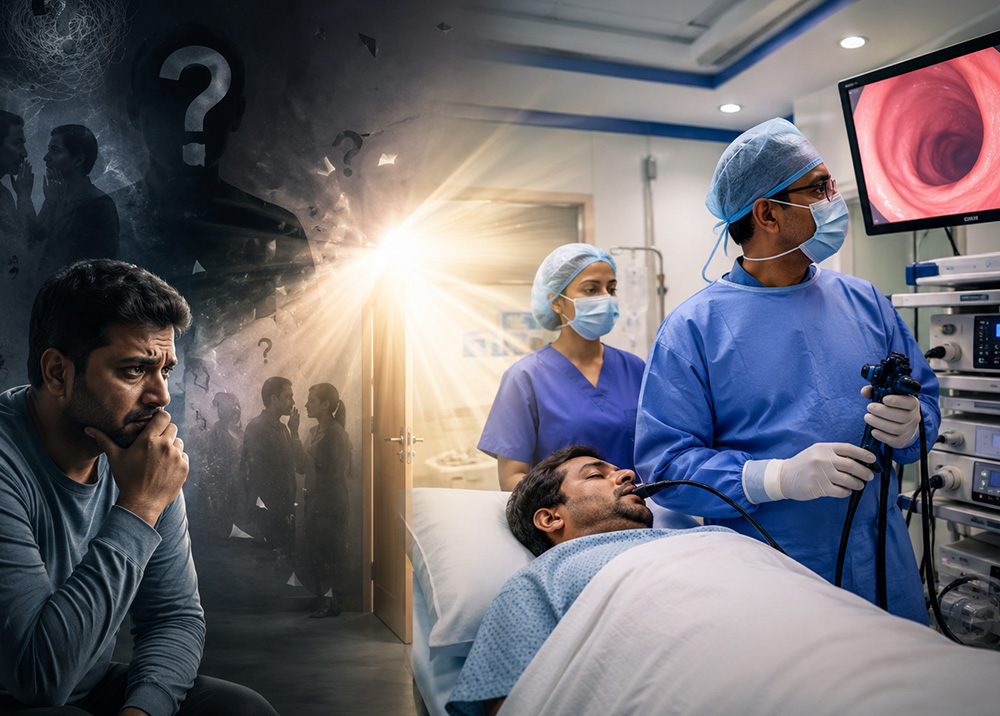
The moment a doctor mentions the word endoscopy, your mind instantly goes into panic mode. You picture an uncomfortable, choking tube, intense gagging, and a terrifying loss of control. It is a completely natural human reaction, but it is also a dangerous one because that vivid mental anxiety causes thousands of patients to delay a critical endoscopy test, turning a highly treatable digestive issue into a severe medical emergency.
According to Dr. Saurabh Jaisawal, Bihar’s only CMC Vellore-trained Consultant Gastroenterologist and Hepatologist in Patna, the vast majority of this fear surrounding endoscopy in Patna is completely outdated. The reality of modern interventional gastroenterology is safe, painless, and minimally invasive, completely unlike the horrors one reads online. Today, advanced high-definition scopes and gentle conscious sedation have transformed what used to be a dreaded ordeal into a smooth, completely painless, 15-minute outpatient procedure. In this blog, we bust the top myths surrounding endoscopy tests in Patna.
What is an Endoscopy?
At its core, an endoscopy is a minimally invasive medical procedure where a specialist uses a thin, highly flexible tube fitted with a high-definition camera and light, called an endoscope, to visually examine the inside of your organs.
Types of Endoscopy
Depending on your specific digestive symptoms, this advanced tool can be deployed in two highly distinct ways:
Diagnostic Endoscopy: This is primarily used to look inside the body, capture crystal-clear images, and investigate the root cause of symptoms like internal bleeding, chronic reflux, or swallowing difficulties. It often includes taking a tiny, painless tissue sample (a biopsy) to rule out infections, celiac disease, or cancerous cells.
Therapeutic Endoscopy: Beyond just looking, this approach actively treats the underlying disease. Specialized micro-instruments are passed directly through the endoscope channel to fix structural issues without the need for large surgical incisions.
Common Real-World Examples
Upper GI Endoscopy (Gastroscopy): A thin scope examines the esophagus, stomach, and duodenum. It is the gold standard for locating severe stomach ulcers or diagnosing chronic acid reflux (gastroscopy in Patna).
Colonoscopy & Sigmoidoscopy: Visualizes the lower digestive tract (colon and rectum). A prime therapeutic example is a polypectomy, where precancerous polyps are cleanly removed during the scan to prevent colon cancer.
Endoscopic Ultrasound (EUS): Combines an endoscope with sound waves to create highly detailed images of deep tissues. It allows the specialist to look beyond the gut wall to accurately stage GI cancers and evaluate pancreatic cysts.
ERCP (Endoscopic Retrograde Cholangiopancreatography): Uses a specialized side-viewing scope and X-rays to access the bile and pancreatic ducts. It is frequently used to safely extract painful gallstones trapped in the common bile duct.
Capsule Endoscopy: The patient swallows a tiny, pill-sized camera that takes thousands of images as it travels naturally through the digestive tract, mapping hard-to-reach areas of the small intestine.
Benefits of Modern Endoscopy
Choosing an advanced endoscopy over traditional exploratory methods offers distinct, clear advantages for your recovery and peace of mind:
- Greater diagnostic accuracy than standard imaging tools like X-Ray and ultrasound.
- Simultaneous disease treatment when a complex problem is found during a screening.
- Zero external surgical incisions; faster recovery and lower chances of infections.
- Quick procedures, lasting no more than 20 mins to an hour in most cases.
- Same-day outpatient discharge and return to normal activities the next day.
Debunking 5 Common Endoscopy Myths
Myth 1: The procedure is extremely painful and causes choking
Fact: Modern endoscopies are performed using a highly effective local anaesthetic spray that completely numbs the throat, completely suppressing your gag reflex. Additionally, conscious sedation is routinely used, meaning you will remain deeply relaxed or light asleep throughout the short session, feeling absolutely zero pain.
Myth 2: An endoscopy is highly dangerous and requires days of hospitalization
Fact: An endoscopy is an incredibly safe, standard outpatient procedure with a complication rate well below 1%. You do not need to check into a hospital room for days; the actual process typically takes only 15 to 30 minutes, and you can resume regular activities the very next day.
Myth 3: A biopsy taken during endoscopy means I definitely have cancer
Fact: This is a very common fear about endoscopy in Patna. In reality, taking a tiny tissue biopsy is a routine, standard protocol to screen for a wide array of completely benign conditions, such as simple stomach inflammation (gastritis), common bacterial infections, or gluten allergies.
Myth 4: I cannot eat or drink normally for weeks after the test
Fact: While you must fast for a few hours before the test to ensure your stomach is completely empty for clear visibility, your throat numbness will wear off within an hour after the procedure. Once it does, you can generally return to your normal diet and fluids immediately.
Myth 5: All clinics use the same basic tools, so the choice of doctor doesn’t matter
Fact: The ultimate safety and clinical success of your procedure rely completely on the skill of the operator and the quality of the centre’s infrastructure. To achieve an accurate diagnosis and prevent complications, it is highly critical to choose an elite, dedicated gastroenterologist for endoscopy in Patna who works with advanced, international sterilization protocols.

“An endoscopy isn’t something to fear; it is the single most powerful tool we have to look inside, fix structural damage, and give you concrete answers. Delaying a routine test out of anxiety only gives a quiet disease more time to grow.”
When Does a Doctor Recommend an Endoscopy?
Dr. Saurubh Jaisawal, trusted endoscopy doctor in Patna, typically recommends booking an appointment for an endoscopy if you present with any of these persistent or alarming gastrointestinal warning signs:
- Unexplained, progressive difficulty or pain when swallowing food.
- Persistent, chronic heartburn or severe acid reflux that fails to improve with standard medications.
- Sudden, unintentional weight loss accompanied by chronic, vague abdominal pain.
- Signs of internal upper GI tract bleeding, such as vomiting dark blood or passing unusual black, tarry stools.
- Chronic, unexplained diarrhoea or severe changes in bowel habits that don’t respond to primary treatments.
Visit Dynamic Super-Speciality Liver & Gastro Center, Patna
Don’t let completely unfounded fears stand between you and accurate medical answers. Modern gastrointestinal care makes managing your health entirely stress-free, painless, and safe.
Consult Dr. Saurubh Jaisawal, a trusted endoscopy specialist in Patna, to ensure an accurate diagnosis under elite clinical supervision, and take the first decisive step toward long-lasting relief.
Book Appointment Now: +91 94706 23130
Address: Pillar No. 76, Mazar Gali, Raja Bazar, Patna – 800014.
Website: https://drsaurabhjaiswalpatna.com/
Google Profile: Dynamic Liver Centre – Dr Saurabh Jaiswal | Best Gastroenterologist in Patna, Bihar